
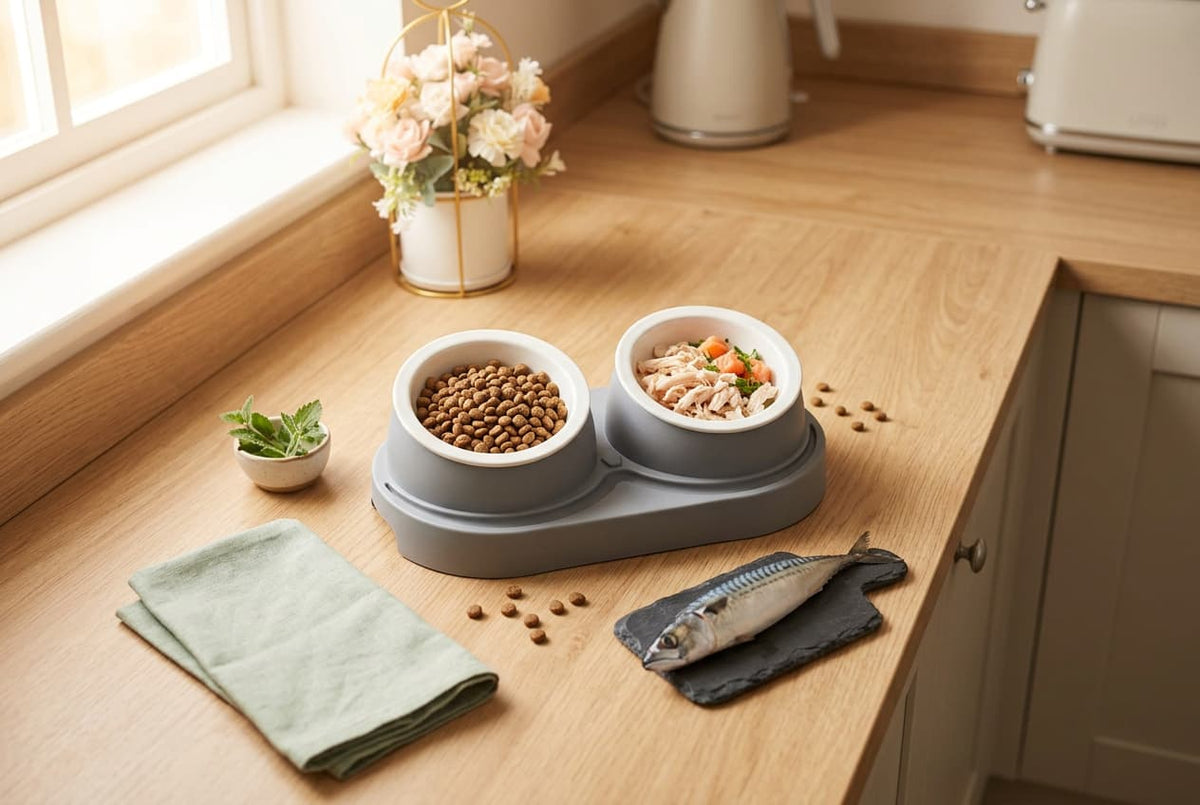
Every cat owner wants the same thing — a happy, healthy cat who bounds through life with energy, a glossy coat and a purr that fills the room. And while playtime, enrichment and plenty of cuddles all play their part, nothing has a bigger impact on your cat's overall health than what goes in their bowl every single day.
But cat nutrition can feel overwhelming. Cats are notoriously fussy eaters, and with so many food options, conflicting advice and a growing list of what cats can and can't eat, it's hard to know where to start. That's why we've put together this complete guide — everything you need to know about feeding your cat well, avoiding common mistakes and setting them up for a long and healthy life. 🐾
What Makes Cat Nutrition Different From Dogs?
Before we dive in, it's worth understanding one key thing — cats are obligate carnivores. Unlike dogs, who are omnivores and can thrive on a varied diet, cats must eat meat to survive. Their bodies cannot produce certain essential nutrients on their own, which means they rely entirely on animal protein to get what they need.
This makes cat nutrition simpler in some ways — meat is always the answer — but it also means that certain foods that are fine for humans or even dogs can be seriously harmful to cats.
What Does a Balanced Cat Diet Look Like?
A healthy, balanced diet for a cat should include the following key nutrients:
Protein is the most critical nutrient in your cat's diet. Cats need significantly more protein than dogs or humans — it supports muscle maintenance, energy levels, immune function and organ health. Good sources include chicken, turkey, fish, beef and eggs. Always make sure a named animal protein is listed as the first ingredient in any commercial cat food you buy.
Fats are essential for energy, a healthy coat and skin, and brain function. Omega-3 and omega-6 fatty acids — found naturally in oily fish such as salmon and sardines — are particularly beneficial for cats.
Taurine is an amino acid that cats cannot produce themselves and must get from their diet. A deficiency in taurine can lead to serious heart and eye problems. It's found naturally in meat and fish, and any good quality commercial cat food should contain adequate levels.
Water is absolutely essential for cats — and this is where many cat owners fall short. Cats have a naturally low thirst drive and often don't drink enough water on their own, which can lead to urinary tract issues and kidney problems over time. Wet food is an excellent way to increase your cat's water intake, and always make sure fresh water is available at all times.
Vitamins and minerals support everything from bone health to immune function. A well-balanced commercial cat food should cover most of your cat's vitamin and mineral needs.
The Best Foods to Feed Your Cat
The good news is that many everyday foods are not only safe for cats but genuinely beneficial to their health. Here are some of the best:
Cooked chicken and turkey are among the best foods you can give your cat — lean, high in protein and easy to digest. Always serve them plain and cooked — never seasoned, marinated or raw from the supermarket without proper preparation.
Fish such as salmon, sardines and tuna are rich in omega-3 fatty acids and protein. Cats tend to love the smell and taste of fish, making it a brilliant treat or food topper. Always serve it cooked and boneless.
Eggs are a great source of protein and healthy fats. Scrambled or boiled with no added butter or seasoning make a wonderful occasional treat for cats.
Pumpkin is excellent for digestive health and is particularly helpful for cats with constipation or sensitive stomachs. Plain cooked or tinned pumpkin works brilliantly — just make sure it's not pie filling.
Wet cat food is highly recommended as part of your cat's diet, particularly for cats who don't drink enough water. The high moisture content helps support urinary tract and kidney health.
Dry cat food is convenient and great for dental health, but should ideally be combined with wet food or supplemented with plenty of fresh water to keep your cat hydrated.
Foods That Are Toxic to Cats — Keep These Out of Reach
This is arguably the most important section of this guide. Many everyday human foods are not just unhealthy for cats — they are genuinely toxic and can cause serious harm or even be fatal. Every cat owner should know this list by heart.
Onions, garlic, leeks and chives — whether raw, cooked or powdered — are highly toxic to cats and can cause damage to red blood cells leading to anaemia. Even small amounts can be harmful, so always check the ingredients of any human food before sharing.
Grapes and raisins can cause sudden kidney failure in cats — even in very small quantities. The exact toxic compound is still unknown, which makes them particularly dangerous. There is no safe amount.
Chocolate contains theobromine and caffeine, both of which are toxic to cats. Even small amounts can cause vomiting, seizures and in severe cases, death. Dark chocolate and baking chocolate are the most dangerous.
Xylitol is an artificial sweetener found in sugar-free chewing gum, sweets and some baked goods. It can cause a rapid drop in blood sugar and liver failure in cats. Always check labels carefully.
Alcohol should never be given to cats under any circumstances. Even tiny amounts can cause serious liver and brain damage.
Caffeine found in coffee, tea and energy drinks is toxic to cats and can cause rapid heart rate, tremors and seizures.
Raw fish in large quantities — while small amounts of cooked fish are beneficial, feeding large amounts of raw fish can destroy thiamine (vitamin B1) in cats, leading to neurological problems over time.
Milk and dairy products — despite the famous image of cats drinking milk, most adult cats are actually lactose intolerant. Dairy can cause digestive upset, vomiting and diarrhoea. Always opt for cat-specific milk if you want to give them a dairy treat.
Raw eggs can contain salmonella and also contain avidin, an enzyme that interferes with the absorption of biotin (a B vitamin) in cats. Always serve eggs cooked.
Cooked bones can splinter and cause internal injuries. Never give your cat cooked bones of any kind.
How Much Should You Feed Your Cat?
Every cat is different, and the right amount of food depends on their age, size, activity level and whether they are indoor or outdoor cats. As a general guide:
Kittens need more calories relative to their size than adult cats and should be fed three to four times a day to support their rapid growth and development. Always use kitten-specific food until they reach 12 months.
Adult cats generally do well on two meals a day — once in the morning and once in the evening — with portion sizes based on their weight and the guidelines on their food packaging.
Senior cats may need fewer calories as their activity levels drop, but higher levels of joint-supporting nutrients and easily digestible protein. Senior-specific cat food is worth considering from around 7 years of age.
Indoor cats tend to be less active than outdoor cats and may need slightly fewer calories to avoid weight gain. Always monitor their weight and adjust portions accordingly.
Always follow the feeding guidelines on your chosen cat food and adjust based on your cat's weight, energy levels and body condition. If you're ever unsure, your vet is always the best person to ask.
The Right Bowl Makes a Difference Too
It's not just what your cat eats — it's how they eat it. The right feeding setup can make a real difference to your cat's comfort, digestion and enjoyment of mealtimes.
Our 15° Tilted Food & Water Bowl 👈 features a gentle tilt that makes eating more natural and comfortable for cats — particularly flat-faced breeds such as Persians and British Shorthairs who can struggle with standard bowls. Available in 3 beautiful pastel colours with a choice of stainless steel or ceramic bowls. 💛
For something a little more decorative, our Elevated Double Stainless Steel & Ceramic Pet Bowls 👈 are available in 6 gorgeous colours with a choice of stainless steel, ceramic or plain white plastic bowls — stylish enough to sit proudly in any kitchen. 🐾
And for the ultimate stylish feeding setup, our Elevated 3-in-1 Bamboo Cat Feeding Station 👈 is a beautiful natural bamboo option that elevates your cat's bowls to a comfortable height and looks stunning in any home. 💛
Don't forget — fresh water should always be available alongside every meal. A clean, well-placed water bowl is just as important as the food bowl itself. 🐾
Final Thoughts
Feeding your cat well is one of the greatest acts of love you can give them. A balanced diet packed with quality protein, healthy fats, the right vitamins and minerals and plenty of fresh water will keep them healthy, happy and by your side for years to come.
And remember — when in doubt, always check with your vet. Every cat is unique, and professional advice is always the best place to start when making changes to your cat's diet.
Loved this guide? Share it with a fellow cat owner who needs it! 🐾
Ready to upgrade your cat's feeding routine? Browse our full range at Urban Pet Shop 👈
Shop now at UrbanPetShop 👈
🚚 Free UK shipping on all orders over £24.99
🍂 Autumn Sale — up to 35% off, automatically applied at checkout, no code needed!


Leave a comment
This site is protected by hCaptcha and the hCaptcha Privacy Policy and Terms of Service apply.