
Every dog owner knows that look. 😔
The wide eyes. The tucked tail. The panting that won't stop even though they haven't moved in an hour. The way they follow you from room to room and press themselves against your legs like they're afraid you might disappear.
Anxiety in dogs is one of the most common and most heartbreaking things a pet owner can experience. Because you can see they're suffering — and you can't always explain to them that everything is okay.
The good news is that dog anxiety is manageable. With the right understanding, the right environment and the right products — even the most anxious dog can learn to feel safe, calm and settled. 💛
This is your complete guide to helping an anxious dog — what actually works and what doesn't. 🐾
Understanding Dog Anxiety — Why Does It Happen?
Before we talk about solutions it helps to understand where anxiety comes from — because the cause matters enormously for finding the right fix.
Separation anxiety The most common form of dog anxiety in the UK. Your dog becomes distressed when left alone — sometimes even for a few minutes. Signs include barking, howling, destructive behaviour, toileting indoors and frantic behaviour when you return home.
Noise anxiety Fireworks, thunderstorms, loud traffic, building work — any sudden loud noise can trigger genuine terror in anxious dogs. Noise anxiety is particularly common in rescue dogs and certain breeds.
Social anxiety Some dogs become anxious around strangers, other dogs or in busy environments like parks, streets and vet waiting rooms. They may growl, cower, shake or try to escape.
Generalised anxiety Some dogs are simply anxious by nature — always on edge, always watchful, never fully relaxed even in safe familiar environments. This is often seen in rescue dogs who have experienced trauma or neglect.
Situational anxiety Triggered by specific situations — car journeys, vet visits, grooming appointments, moving house or changes in routine.
Signs Your Dog is Anxious
Many anxious dogs suffer in silence — their signs are subtle and easy to miss or misinterpret as bad behaviour.
Signs to watch for include excessive panting, yawning or lip licking, trembling or shaking, tucked tail, flattened ears, excessive barking or whining, destructive behaviour, toileting indoors, refusing to eat, hiding or cowering, excessive clinginess and pacing or restlessness.
If your dog displays any of these regularly — especially in specific situations — anxiety is likely the cause.
What Actually Works — Proven Solutions for Anxious Dogs
Create a safe space 🏠
Every anxious dog needs somewhere that is entirely theirs — a den like space where they feel completely safe and can retreat to whenever the world feels overwhelming.
A covered crate with soft bedding, a quiet corner with their favourite blanket or an enclosed cave bed all work brilliantly. The key is consistency — the safe space should always be available, always accessible and never associated with punishment.
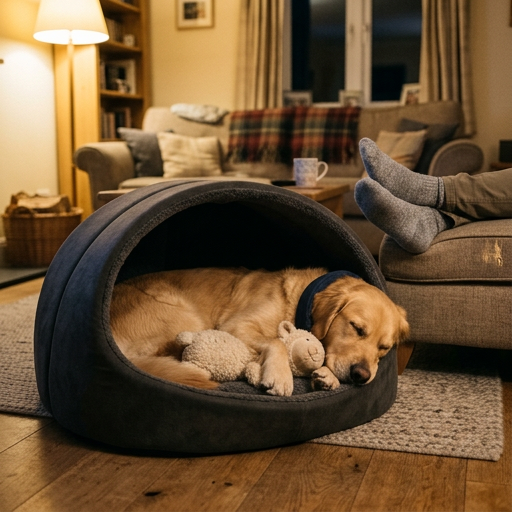
The Calming Cave Dog Bed The Calming Cave Dog Bed is specifically designed to provide exactly this kind of safe den like environment. The enclosed design naturally reduces sensory input — blocking out light, muffling sound and creating a cosy enclosed space that makes anxious dogs feel hidden, protected and safe.
Most anxious dogs discover it within minutes and immediately claim it as their own. 💛
→ Shop the Calming Cave Dog Bed for Anxious Dogs UK
Calming Pheromone Collars 😌
One of the most effective and scientifically backed solutions for dog anxiety — and one that most owners don't discover until someone tells them about it.
Calming dog collars release synthetic versions of the natural pheromones that mother dogs produce to comfort their puppies. These pheromones have a powerful calming effect on dogs of all ages — reducing anxiety, lowering stress levels and helping dogs feel safe and settled in situations that would normally trigger panic.
The Calming Dog Collar Simply put it on your dog and let it work. No effort required. The calming pheromones release continuously throughout the day — helping your dog feel calmer and more settled from morning to night.
Most owners notice a difference within the first few days. Some see results almost immediately. 💛
→ Shop the Calming Dog Collar UK
The Calming Heartbeat Comfort Plush 🧸
For dogs with separation anxiety or dogs who struggle to settle at night — the Calming Heartbeat Comfort Plush is one of the most effective and most loved products we stock.
The soft plush toy contains a gentle simulated heartbeat that mimics the feeling of being close to their mum and littermates — providing deep comfort and reassurance for anxious dogs who struggle when alone.
Place it in their bed or crate when you leave and most dogs settle significantly faster and stay calmer throughout the time you're away.
→ Shop the Calming Heartbeat Comfort Plush UK
The Calming Dog Hoodie 👕
Gentle compression has a scientifically proven calming effect on anxious dogs — similar to the effect of swaddling a baby or a weighted blanket for humans.
The Calming Dog Hoodie applies gentle even pressure across your dog's body — triggering the nervous system's natural calming response and reducing anxiety in stressful situations like fireworks, thunderstorms, vet visits and car journeys.
Many owners are genuinely amazed at the difference it makes — a dog who would normally be trembling and inconsolable during fireworks lying calmly in their bed. 💛
→ Shop the Calming Dog Hoodie UK
Exercise and Mental Stimulation 🎾
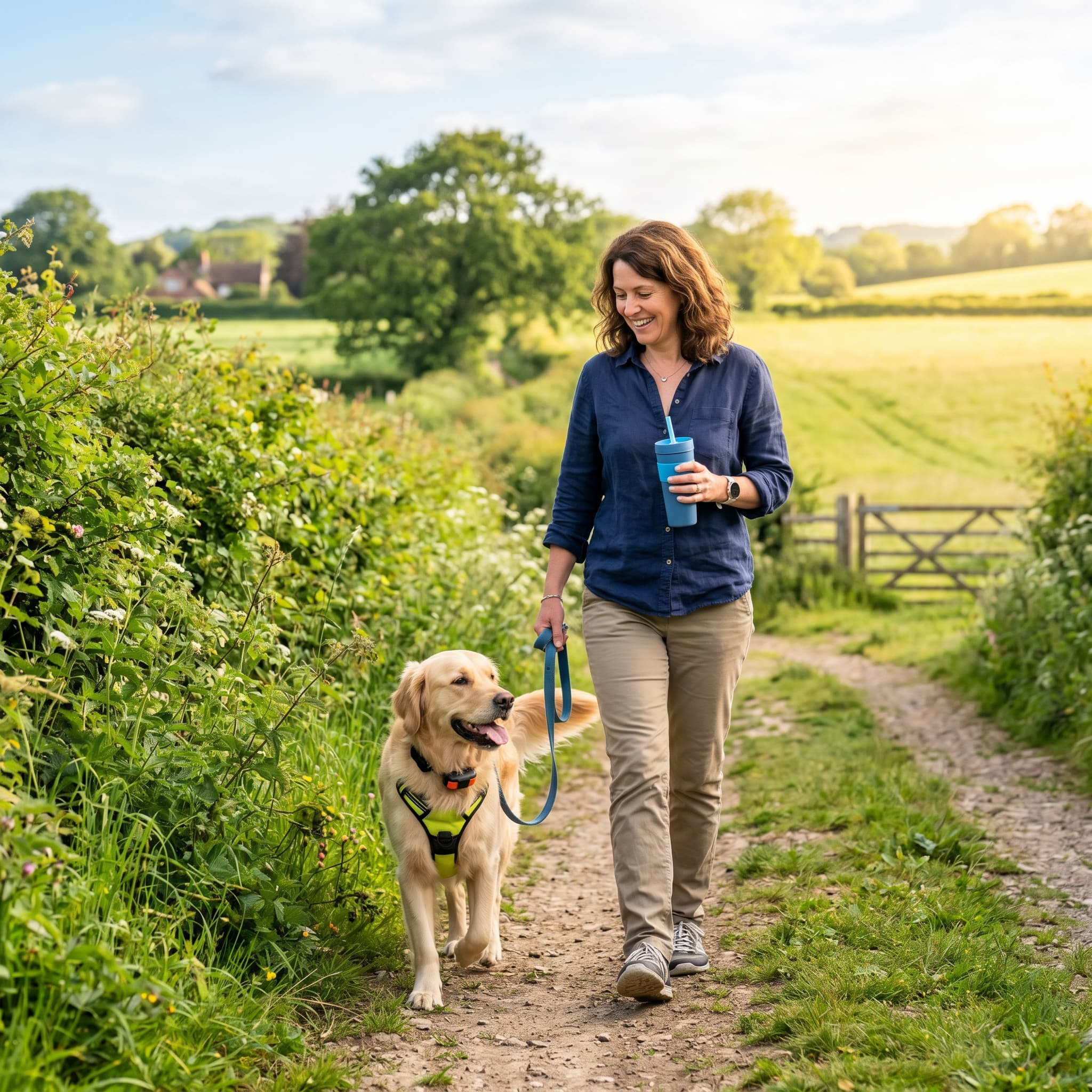
A tired dog is a calmer dog. This is one of the most consistently effective strategies for managing generalised anxiety and separation anxiety.
Anxious dogs have excess nervous energy that needs an outlet. Without adequate exercise and mental stimulation that energy turns into anxiety, destructive behaviour and restlessness.
Make sure your dog gets:
- Sufficient daily physical exercise for their breed and age
- Mental stimulation through training, puzzle feeders and interactive toys
- Regular social interaction with people and other dogs where appropriate
Interactive Toys and Treat Dispensers Interactive toys that make your dog work for their food are one of the best tools for mental stimulation — keeping anxious dogs occupied, focused and calm during the times they would otherwise be most anxious.
→ Shop Interactive Toys and Treat Dispensers for Dogs UK
Routine and Consistency 📅
Anxious dogs thrive on routine. Knowing exactly what to expect and when — walk time, meal time, bedtime — gives anxious dogs a sense of control and predictability that dramatically reduces their baseline anxiety levels.
Try to keep your dog's daily routine as consistent as possible — same walk times, same meal times, same bedtime. Even small changes in routine can trigger anxiety in sensitive dogs so minimise disruption wherever possible.
Music and Background Noise 🎵
Leaving a radio or television on at a low volume when you go out can significantly reduce separation anxiety — the background noise masks outdoor sounds that might trigger barking and provides a sense of company for dogs left alone.
There are playlists specifically composed to calm anxious dogs available on Spotify — classical music and specially designed dog calming music have both been shown to reduce anxiety in dogs. Worth trying before you reach for more expensive solutions.
Never Punish Anxious Behaviour
This is one of the most important things to understand about dog anxiety — punishment makes it worse. Always.
An anxious dog who is shouted at, told off or punished for anxious behaviour doesn't learn to stop being anxious. They learn that their anxiety leads to more bad things happening — which increases their anxiety further.
Always respond to anxious behaviour with calm reassurance, redirection and patience. Reward calm behaviour. Ignore or gently redirect anxious behaviour. Never punish it. 💛
When to See a Vet or Behaviourist
Sometimes anxiety is severe enough that it needs professional support beyond what products and management strategies alone can provide.
Consider speaking to your vet if:
- Your dog's anxiety is significantly impacting their quality of life
- Anxiety is causing destructive behaviour, self harm or aggression
- Your dog cannot be left alone at all without severe distress
- Nothing you try seems to make any difference
Your vet may recommend a referral to a certified animal behaviourist or in some cases short term medication to help your dog reach a calmer baseline from which behavioural work can begin. There is no shame in seeking professional help — for very anxious dogs it can be genuinely life changing. 💛
A Final Word
Living with an anxious dog takes patience, consistency and compassion. There are no overnight fixes and no one size fits all solutions.
But with the right tools, the right environment and the right support — even the most anxious dog can learn to feel safe. To settle. To trust. To finally relax. 💛
And that moment — when your anxious dog curls up in their bed, lets out a long slow breath and actually rests — makes every bit of effort completely worth it. 🐾
Shop our full calming range at UrbanPetShop.co.uk
Free shipping on all orders over £24.99 across the UK. 🚚

Leave a comment
All comments are moderated before being published.
This site is protected by hCaptcha and the hCaptcha Privacy Policy and Terms of Service apply.