
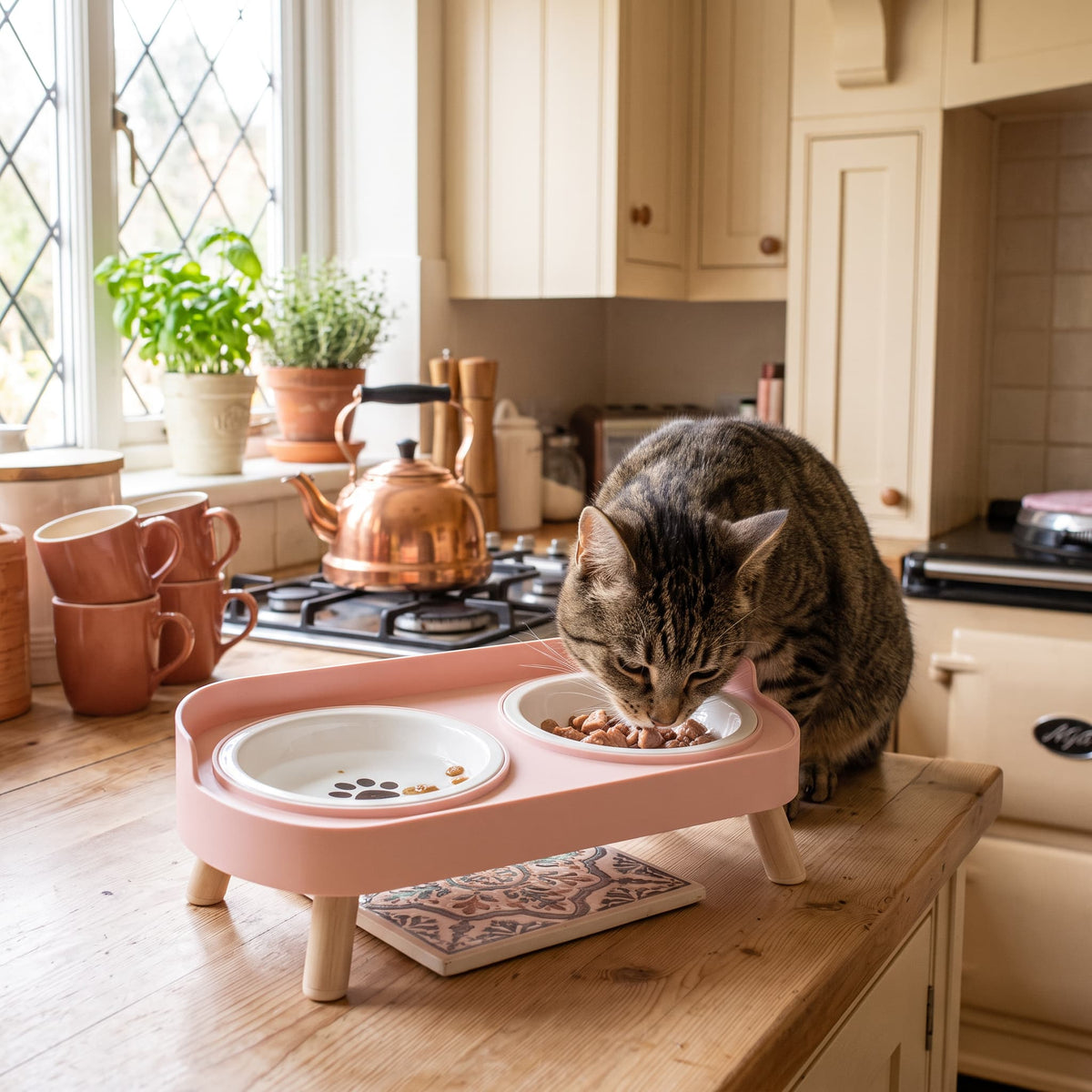
If your cat has ever pawed food out of their bowl onto the floor before eating it, refused to finish a meal that's clearly still there, or seemed stressed and agitated around mealtimes — whisker fatigue could be the reason. 🐱
It's one of those conditions that sounds almost too niche to be real — but once you understand how sensitive your cat's whiskers actually are, it makes complete sense. And once you fix it, the difference in your cat's behaviour at mealtimes can be remarkable. 💛
Here's everything you need to know. 🐾
What Are Whiskers Actually For?
Before we talk about whisker fatigue, it helps to understand just how extraordinary your cat's whiskers are.
Whiskers — or vibrissae — are not just longer hairs. They are highly specialised sensory organs, deeply embedded in the skin and connected to a dense network of nerve endings and sensory cells. They are so sensitive that they can detect even the slightest changes in air movement, pressure and vibration around your cat.
Whiskers help your cat:
🐱 Navigate in the dark — detecting objects and obstacles without needing to see them
🐱 Judge spaces — determining whether they can fit through a gap before attempting it
🐱 Hunt — detecting the movement of prey even in low light
🐱 Communicate — whisker position signals mood and intent to other cats
🐱 Sense their environment — detecting changes in air current that signal movement nearby
They are, in short, one of the most important sensory tools your cat has. And they are incredibly sensitive.
So What Is Whisker Fatigue?
Whisker fatigue — sometimes called whisker stress — happens when a cat's whiskers are repeatedly overstimulated through contact with the sides of a food or water bowl during mealtimes.
Every time your cat leans into a narrow or deep bowl to eat, their whiskers brush against the sides. Each contact sends a sensory signal to the brain. Do that repeatedly — twice a day, every day, for months and years — and the constant stimulation becomes genuinely uncomfortable and stressful for your cat.
It's not painful in the same way a physical injury is — but it creates a persistent low-level sensory overload that can make mealtimes something your cat actively dreads rather than enjoys.
Signs Your Cat May Have Whisker Fatigue
Because cats can't tell us what's bothering them, whisker fatigue is often missed entirely — or misattributed to fussiness, illness or behavioural problems.
Here are the most common signs to look out for:
😟 Pawing food out of the bowl onto the floor — this is the most classic sign. Your cat is trying to eat without their whiskers touching the bowl sides
😟 Only eating from the very centre of the bowl — eating around the edges would mean whisker contact
😟 Acting hungry but refusing to eat from the bowl — walking away from a bowl that still has food in it
😟 Seeming agitated or unsettled around mealtimes — pacing, vocalising or appearing stressed before or during eating
😟 Preferring to drink from running water or a flat surface — avoiding the bowl entirely
😟 Eating more comfortably from a flat plate or shallow dish — a strong indicator that the bowl itself is the problem
If your cat is showing any of these signs and you've ruled out illness with your vet, whisker fatigue is well worth investigating as the cause.
What Causes It?
The simple answer is bowl shape. Specifically:
Deep bowls — force your cat to plunge their head in further, increasing whisker contact with the sides
Narrow bowls — even shallow ones can cause problems if the diameter is too small
High-sided bowls — the higher the sides, the more likely the whiskers are to make contact
Most standard pet bowls — particularly the small round bowls sold alongside pet food in supermarkets — are exactly the wrong shape for cats. They're designed for convenience, not for feline anatomy.
How to Help Your Cat
The good news is that whisker fatigue is simple to address once you know what's causing it. Here's what to do:
1. Switch to a Wide, Shallow Bowl
The most effective solution is the simplest one — replace your cat's current bowl with one that is wide enough for their whiskers not to touch the sides during eating.
As a general rule, look for a bowl with a diameter of at least 15cm — wider if you have a larger breed cat like a Maine Coon or Ragdoll.
Tilted Double Ceramic Cat Feeding Bowl 👈
Our tilted ceramic cat feeding bowls are designed with exactly this in mind. The wide, shallow design gives your cat plenty of room to eat without whisker contact, while the tilted angle reduces the amount of bending and neck strain needed at mealtimes. Available in gorgeous colours with adorable paw print and fish bone designs — practical and beautiful. 🐱💛
Elevated Double Stainless Steel & Ceramic Pet Bowls 👈
Our elevated stainless steel bowls are wide and generously sized — perfect for cats prone to whisker sensitivity. Available in 6 beautiful colours with both stainless steel, ceramic and plastic bowl options. The elevated stand raises the bowl to a more comfortable height, reducing neck and joint strain at mealtimes too. 🐾
2. Try an Elevated Feeding Station
Elevation helps in two ways — it raises the bowl to a more natural eating height, reducing neck strain, and the wider opening of most elevated bowl designs naturally accommodates your cat's whiskers more comfortably.
Bamboo Elevated Triple Cat Feeding Station 👈
Our bamboo triple feeding station is a brilliant option for cats with whisker sensitivity — three wide bowls raised to a comfortable ergonomic height on a beautiful natural bamboo stand. Separate stations for food, water and treats — and wide enough that whisker contact simply isn't an issue. 🌿🐱
3. Try a Flat Plate
If you want to test whether whisker fatigue is the issue before investing in new bowls, try putting your cat's food on a flat plate for a week. If they eat more comfortably and with less stress — whisker fatigue is almost certainly the cause.
4. Keep Bowls Clean
Dirty bowls can compound whisker sensitivity — the smell of old food can be enough to put a sensitive cat off eating, on top of the physical discomfort. Wash bowls daily and replace water fresh at least twice a day.
5. Consider Separate Food and Water Stations
Many cats prefer their food and water in separate locations — in the wild, cats instinctively avoid drinking water near where they eat, as standing water near prey could be contaminated. Separating food and water can reduce mealtime stress significantly. 🐱
Does My Cat Definitely Have Whisker Fatigue?
It's important to note that the signs of whisker fatigue can sometimes overlap with other issues — dental pain, illness, food preferences or simply fussiness. If your cat's eating behaviour has changed suddenly, always speak to your vet first to rule out any underlying health issues before attributing the change to whisker fatigue.
That said — if your cat has always been a little awkward around their bowl, paws food out habitually, or consistently prefers eating from a flat surface — whisker fatigue is a very likely explanation. And the fix is simple, affordable and makes a real difference. 💛
Quick Whisker Fatigue Checklist
✅ Switch to a wide shallow bowl with a diameter of at least 15cm
✅ Try an elevated feeding station for added comfort
✅ Test with a flat plate to confirm whisker fatigue is the cause
✅ Keep bowls scrupulously clean and water fresh
✅ Separate food and water stations where possible
✅ Speak to your vet if eating behaviour has changed suddenly
Final Thoughts
Whisker fatigue is one of those things that once you know about it, you can't unknow it — and you'll never look at a small round pet bowl the same way again. 😄
The fix is simple, the difference can be remarkable, and your cat will thank you for it every single mealtime. 🐱💛
Loved this guide? Share it with a fellow cat owner who needs it! 🐾
Ready to upgrade your cat's feeding setup? Browse our full range of cat feeding stations at Urban Pet Shop 👈
Shop now at urbanpetshop 👈
🚚 Free UK shipping on all orders over £24.99
🍂 Autumn Sale — up to 35% off, automatically applied at checkout, no code needed!


Leave a comment
All comments are moderated before being published.
This site is protected by hCaptcha and the hCaptcha Privacy Policy and Terms of Service apply.