
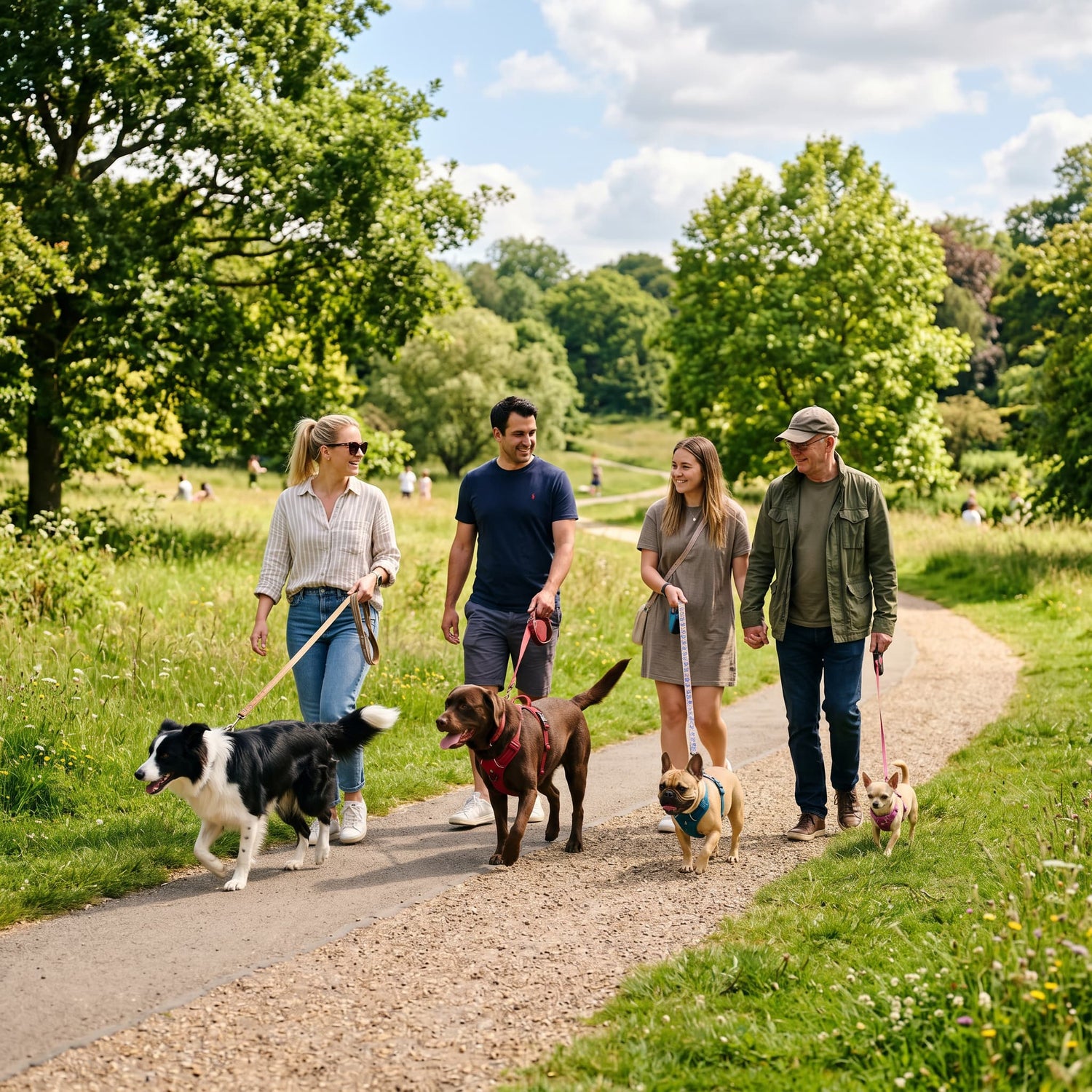
Every dog needs exercise — but not every dog needs the same amount. Here's the complete breed by breed guide to how much exercise your dog really needs and how to make sure they're getting exactly the right amount. 🐾
Why Exercise Matters for Your Dog
Exercise isn't just about keeping your dog physically fit. It plays a vital role in your dog's overall health and wellbeing — covering everything from weight management and joint health to mental stimulation and behaviour.
A dog who gets the right amount of exercise is:
🐾 Physically healthier — maintaining a healthy weight and strong muscles and joints
🐾 Mentally stimulated — reducing boredom, anxiety and destructive behaviour
🐾 Better behaved — a tired dog is a well behaved dog
🐾 Happier — exercise releases endorphins in dogs just as it does in humans
🐾 Longer lived — regular exercise is one of the strongest predictors of a long healthy life in dogs
On the flip side both too little AND too much exercise can cause problems — so getting the balance right for your individual dog and breed is important. 💛
Factors That Affect How Much Exercise Your Dog Needs
Before we get into the breed by breed guide it's worth understanding the key factors that influence your dog's individual exercise needs — because two dogs of the same breed can have quite different requirements.
Age — puppies need much less exercise than adult dogs and their exercise should be carefully controlled to protect developing joints. Senior dogs often need shorter, gentler exercise sessions as their joints and energy levels change with age.
Health — a dog with arthritis, heart disease or other health conditions may need reduced or modified exercise. Always consult your vet if your dog has a health condition before starting a new exercise routine.
Weight — overweight dogs need to build up exercise gradually to avoid putting excessive strain on their joints. As they lose weight and get fitter their exercise tolerance will increase.
Individual personality — even within the same breed individual dogs vary significantly. Some Labradors are couch potatoes. Some Basset Hounds are surprisingly energetic. Know your dog as an individual. 🐾
How Much Exercise Do Puppies Need
This is one of the most important and most misunderstood areas of dog exercise. Puppies need FAR less exercise than most people think — and over exercising a puppy can cause serious long term joint damage.
The general rule for puppies:
5 minutes of exercise per month of age, twice a day.
So a 3 month old puppy needs just 15 minutes of exercise twice a day. A 6 month old puppy needs 30 minutes twice a day.
This applies to structured on lead exercise. Off lead free play in the garden can be allowed to continue for as long as the puppy chooses — because puppies naturally self regulate during free play, stopping when they're tired.
What to avoid with puppies:
🚫 Long walks before their vaccinations are complete
🚫 Running or jogging alongside a bicycle
🚫 Jumping on and off furniture or in and out of cars
🚫 Playing on hard surfaces for extended periods
🚫 Forced exercise that goes beyond what they naturally want to do
Most puppies' growth plates — the soft areas of developing bone — don't close until between 12 and 18 months of age depending on breed. Exercising too hard before then can cause permanent damage. 💛
How Much Exercise Do Senior Dogs Need
Senior dogs — generally considered to be dogs over 7 years old, or over 5 for giant breeds — often need their exercise routine adapted as they age.
Signs your senior dog may need less exercise:
🐾 Slowing down on walks or lagging behind
🐾 Stiffness after exercise or when getting up
🐾 Reluctance to go out on walks they previously enjoyed
🐾 Limping during or after exercise
For most senior dogs the answer isn't to stop exercise altogether — it's to adjust it. Shorter, more frequent walks are usually better than one long walk. Swimming and gentle off lead free time are excellent for senior dogs as they're low impact.
Always consult your vet if you notice a significant change in your senior dog's exercise tolerance or enthusiasm. 🐾
Breed by Breed Exercise Guide
High Energy Breeds — 2+ Hours Per Day
These breeds were developed to work all day and have energy levels to match. They need significant daily exercise to stay physically and mentally healthy — and can become destructive, anxious or difficult to manage if their needs aren't met.
Border Collie
Minimum daily exercise: 2+ hours
Border Collies are widely considered the most intelligent and energetic dog breed in the world. Originally bred for all day sheep herding they have almost limitless stamina and an intense need for both physical exercise and mental stimulation. A Border Collie who doesn't get enough exercise will find ways to entertain themselves — and you probably won't like the results. In addition to physical exercise they need regular mental stimulation through training, agility or puzzle activities. 🐾
Siberian Husky
Minimum daily exercise: 2+ hours
Huskies were bred to run hundreds of miles in freezing conditions. They are extraordinarily athletic and have exercise needs that most owners significantly underestimate. Without adequate exercise Huskies are notorious escape artists and can become destructive and vocal. They excel at canicross, sledding and long distance running. Not a breed for sedentary owners. 🐾
German Shepherd
Minimum daily exercise: 2 hours
German Shepherds are working dogs at heart and need significant daily exercise combined with mental stimulation through training. They excel at obedience, agility, tracking and protection sports. Without adequate exercise and stimulation they can become anxious and develop problem behaviours. 🐾
Dalmatian
Minimum daily exercise: 2 hours
Originally bred to run alongside horse drawn carriages for miles at a time Dalmatians have extraordinary endurance and need significant daily exercise. They make excellent running companions and excel at canicross. A bored Dalmatian is a destructive Dalmatian. 🐾
Vizsla
Minimum daily exercise: 2 hours
Vizslas are Hungarian hunting dogs with enormous energy and a deep need for both exercise and human company. They are velcro dogs who want to be with their owners at all times and need significant daily exercise to be happy and settled. 🐾
Weimaraner
Minimum daily exercise: 2 hours
Weimaraners are athletic, energetic hunting dogs who need significant daily exercise and mental stimulation. Without it they become anxious, destructive and difficult to manage. They excel at agility, tracking and hunting activities. 🐾
Belgian Malinois
Minimum daily exercise: 2+ hours
The Belgian Malinois is the dog of choice for military and police forces worldwide — which tells you everything you need to know about their energy levels and drive. They need more exercise, mental stimulation and training than almost any other breed and are genuinely not suitable for most family homes without very experienced owners. 🐾
Active Breeds — 1-2 Hours Per Day
These breeds are energetic and need substantial daily exercise but are generally more manageable than the high energy working breeds above.
Labrador Retriever
Minimum daily exercise: 1-2 hours
Labradors are one of the UK's most popular breeds and for good reason — they are friendly, adaptable and trainable. They are also highly food motivated and prone to weight gain if not exercised adequately. Two good walks a day plus off lead running time keeps most Labradors happy and healthy. Swimming is a particular favourite. 🐾
Golden Retriever
Minimum daily exercise: 1-2 hours
Similar to Labradors Golden Retrievers are active, friendly dogs who need regular substantial exercise. They love swimming, retrieving and long walks. Like Labradors they are prone to weight gain so regular exercise is important for keeping them at a healthy weight. 🐾
Springer Spaniel
Minimum daily exercise: 1.5-2 hours
Springer Spaniels are working gundogs with boundless energy and enthusiasm. They need significant daily exercise including plenty of off lead running time. Without it they become hyperactive and difficult to manage at home. They excel at agility and gundog activities. 🐾
Cocker Spaniel
Minimum daily exercise: 1 hour
Cocker Spaniels are energetic and love to explore with their nose. They need at least an hour of exercise a day including off lead time in a safe area. They are more manageable than Springer Spaniels but still need regular substantial exercise to be calm and settled at home. 🐾
Boxer
Minimum daily exercise: 2 hours
Boxers are boisterous, playful and energetic dogs who need significant daily exercise to burn off their considerable energy. They love to play and interact with their owners and do best with a combination of walking, running and interactive play. 🐾
Dobermann
Minimum daily exercise: 2 hours
Dobermanns are athletic, intelligent working dogs who need significant daily exercise and mental stimulation. They excel at obedience, agility and protection sports. Without adequate exercise they can become anxious and difficult to manage. 🐾
Australian Shepherd
Minimum daily exercise: 1.5-2 hours
Australian Shepherds are herding dogs with high energy levels and a strong need for mental stimulation as well as physical exercise. They excel at agility, frisbee and obedience. A bored Aussie will find their own entertainment — usually at the expense of your furniture. 🐾
Staffordshire Bull Terrier
Minimum daily exercise: 1-2 hours
Staffies are muscular, energetic dogs who need regular substantial exercise. They love to play, run and interact with their owners. Despite their reputation they are affectionate, loyal dogs who do very well with active families. 🐾
Moderate Exercise Breeds — 30-60 Minutes Per Day
These breeds need regular daily exercise but are generally more adaptable and can manage with less than the high energy breeds above.
French Bulldog
Minimum daily exercise: 30-45 minutes
French Bulldogs are a brachycephalic breed — meaning they have a flat face and compressed airways — which limits their exercise tolerance, especially in warm weather. They need regular daily walks but should never be pushed beyond what they're comfortable with. Avoid exercise in hot weather entirely. 🐾
Pug
Minimum daily exercise: 20-30 minutes
Like French Bulldogs Pugs are brachycephalic and have limited exercise tolerance. Short daily walks in cool conditions are sufficient. Never exercise a Pug in hot or humid weather — they overheat very easily and can go into respiratory distress. 🐾
Cavalier King Charles Spaniel
Minimum daily exercise: 30-45 minutes
Cavaliers are gentle, adaptable dogs who enjoy regular daily walks but are perfectly content with moderate exercise. They are prone to heart conditions so it's worth having them checked by a vet regularly, especially as they age. 🐾
Shih Tzu
Minimum daily exercise: 20-30 minutes
Shih Tzus are companion dogs who need regular gentle exercise but are perfectly happy with short daily walks. Like other flat faced breeds they can struggle in hot weather so exercise should be kept to cooler parts of the day in summer. 🐾
Bichon Frise
Minimum daily exercise: 30 minutes
Bichons are small, playful dogs who enjoy daily walks and indoor play. They are adaptable and do well with moderate exercise — perfectly suited to apartment living with regular short walks. 🐾
Dachshund
Minimum daily exercise: 30-60 minutes
Dachshunds are surprisingly energetic for their size but their long backs and short legs mean exercise needs to be managed carefully. Avoid activities that involve jumping or rough play on hard surfaces as their back structure makes them prone to spinal problems. Regular moderate walks are ideal. 🐾
Pomeranian
Minimum daily exercise: 20-30 minutes
Pomeranians are small but spirited dogs who enjoy regular short walks and indoor play. Their small size means they can get a significant amount of their exercise needs met through play at home. 🐾
Chihuahua
Minimum daily exercise: 20-30 minutes
Chihuahuas are tiny but often surprisingly energetic. Short daily walks combined with indoor play usually meets their needs. Be cautious in cold weather — their small size means they lose body heat quickly. 🐾
Low Exercise Breeds — Under 30 Minutes Per Day
These breeds are content with minimal formal exercise — though all dogs still benefit from some daily activity and mental stimulation.
Basset Hound
Minimum daily exercise: 30 minutes
Despite their laid back reputation Basset Hounds do need daily exercise — but they're happy with moderate amounts. Their heavy build and long ears make them prone to joint and ear problems so exercise should be kept at a steady, gentle pace. 🐾
Bulldog
Minimum daily exercise: 20-30 minutes
English Bulldogs are brachycephalic and have very limited exercise tolerance. Short gentle walks in cool conditions are sufficient. Never push a Bulldog to exercise in hot weather — they are extremely susceptible to heatstroke. 🐾
Chow Chow
Minimum daily exercise: 30-45 minutes
Chow Chows are independent, dignified dogs who are content with moderate daily exercise. They are not high energy dogs and are generally happy with one or two moderate walks a day. 🐾
Maltese
Minimum daily exercise: 20-30 minutes
Maltese are small companion dogs who need gentle daily exercise but are happy with short walks and indoor play. Their tiny size means they can meet a significant proportion of their exercise needs through play at home. 🐾
Signs Your Dog Isn't Getting Enough Exercise
🐾 Destructive behaviour — chewing furniture, digging, scratching
🐾 Excessive barking or whining
🐾 Hyperactivity or boisterousness at home
🐾 Pulling excessively on the lead — pent up energy
🐾 Restlessness and inability to settle
🐾 Weight gain
🐾 Attention seeking behaviour
Signs Your Dog Is Getting Too Much Exercise
🐾 Excessive panting or struggling to breathe during walks
🐾 Lagging behind or reluctance to continue
🐾 Limping during or after exercise
🐾 Stiffness or soreness after walks
🐾 Excessive tiredness or lethargy after exercise
🐾 Worn or sore paw pads
Tips for Making the Most of Your Dog's Exercise
🐾 Vary the routes — new smells and environments provide mental stimulation as well as physical exercise
🐾 Off lead time is valuable — free running burns more energy than on lead walking and gives dogs the freedom to move naturally
🐾 Mental stimulation counts — training sessions, puzzle feeders and enrichment activities tire dogs out as effectively as physical exercise
🐾 Socialisation is exercise — time spent playing with other dogs provides excellent physical and mental stimulation
🐾 Consistency matters — regular daily exercise is better than sporadic intense sessions at weekends
🐾 Always carry water — especially in warm weather or after vigorous exercise 💛
Quick Reference — Breed Exercise Guide
| Breed | Daily Exercise |
|---|---|
| Border Collie | 2+ hours |
| Siberian Husky | 2+ hours |
| German Shepherd | 2 hours |
| Dalmatian | 2 hours |
| Labrador Retriever | 1-2 hours |
| Golden Retriever | 1-2 hours |
| Springer Spaniel | 1.5-2 hours |
| Cocker Spaniel | 1 hour |
| Boxer | 2 hours |
| Staffordshire Bull Terrier | 1-2 hours |
| French Bulldog | 30-45 minutes |
| Cavalier King Charles Spaniel | 30-45 minutes |
| Dachshund | 30-60 minutes |
| Pug | 20-30 minutes |
| Shih Tzu | 20-30 minutes |
| Chihuahua | 20-30 minutes |
| Bulldog | 20-30 minutes |
Final Thoughts
Every dog is an individual — and while breed guidelines are a useful starting point, the best measure of whether your dog is getting the right amount of exercise is simply watching them. A well exercised dog is calm, settled, happy and healthy.
Know your dog. Watch their energy levels. Adjust as needed. And enjoy every single walk — because for your dog there is nothing better in the world than going out with you. 🐾💛
Shop our full range of dog leads, collars, walking accessories and more at urbanpetshop.co.uk — free shipping on orders over £24.99 across the UK. 🚚

Leave a comment
All comments are moderated before being published.
This site is protected by hCaptcha and the hCaptcha Privacy Policy and Terms of Service apply.