
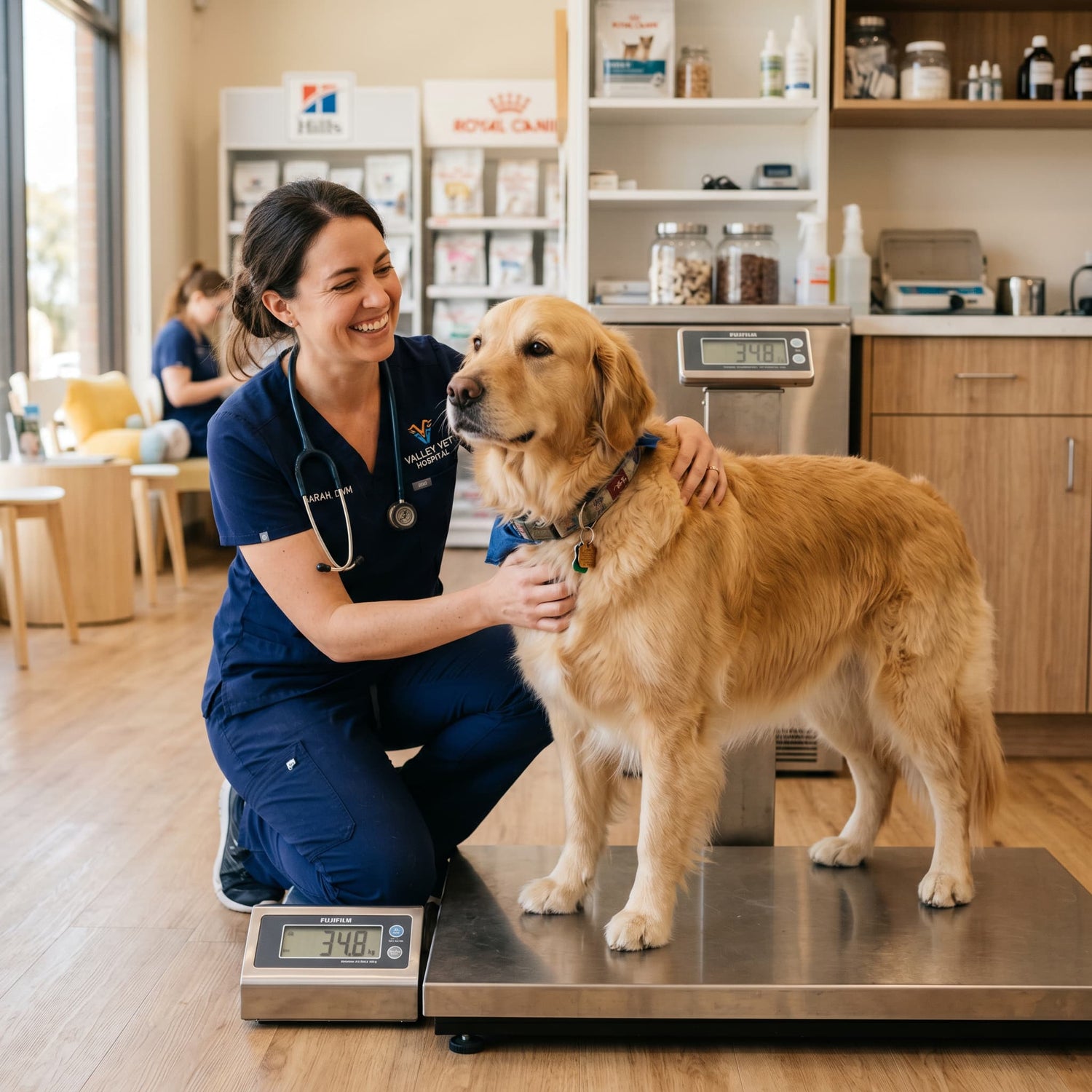
Is your dog carrying a few extra pounds? You're not alone — obesity is one of the most common health problems in UK dogs. Here's everything you need to know about helping your dog reach a healthy weight safely and sustainably. 🐾
Is My Dog Overweight — How to Tell
Before you can help your dog lose weight you need to know whether they actually need to. Many owners don't realise their dog is overweight because the extra weight creeps on gradually and becomes the new normal.
Here are the key signs to look for:
The rib test — run your hands along your dog's sides. You should be able to feel their ribs easily without pressing hard. If you have to press firmly to feel them — or can't feel them at all — your dog is likely carrying too much weight.
The waist test — look at your dog from above. You should be able to see a visible waist behind their ribcage. If their sides are straight or bulging outward they are likely overweight.
The tuck test — look at your dog from the side. Their belly should tuck upward behind their ribcage. If their belly hangs level or sags downward this is a sign of excess weight.
Other signs your dog may be overweight:
🐾 Reluctance to exercise or tiring quickly on walks
🐾 Difficulty getting up or lying down
🐾 Heavy breathing after minimal exertion
🐾 Waddling gait when walking
🐾 Excessive sleeping or low energy levels
🐾 Your vet has mentioned their weight at a checkup
If you're unsure whether your dog is a healthy weight your vet can assess them and give you a body condition score — a simple scale used to measure whether a dog is underweight, ideal or overweight. 💛
Why Dog Weight Matters — The Health Risks of an Overweight Dog
Carrying excess weight isn't just an aesthetic issue — it has serious implications for your dog's health, quality of life and lifespan.
Overweight dogs are at significantly higher risk of:
🐾 Joint problems and arthritis — excess weight puts enormous pressure on joints, accelerating wear and tear and worsening existing conditions
🐾 Heart and respiratory problems — the heart and lungs have to work harder in an overweight dog, increasing the risk of cardiovascular disease
🐾 Diabetes — obesity is a major risk factor for diabetes in dogs
🐾 Reduced lifespan — studies consistently show that overweight dogs live shorter lives than dogs maintained at a healthy weight
🐾 Reduced quality of life — overweight dogs are less able to exercise, play and enjoy life to the full
🐾 Higher surgical risk — overweight dogs face greater risks during any anaesthetic or surgical procedure
🐾 Skin problems — excess skin folds in overweight dogs can trap moisture and cause irritation and infection
The good news is that even modest weight loss makes a significant difference to a dog's health, mobility and happiness. 🐾
Why Dogs Become Overweight — Common Causes
Understanding why your dog has gained weight helps you address the root cause rather than just the symptoms.
Too much food — the most common cause of weight gain in dogs. Many owners significantly overestimate how much their dog should be eating and consistently overfeed without realising it.
Too many treats — treats are often forgotten when calculating a dog's daily calorie intake. A few treats a day can add a significant number of calories, especially in smaller breeds.
Not enough exercise — dogs who don't get enough physical activity burn fewer calories and are more likely to gain weight over time.
Age — older dogs have slower metabolisms and lower activity levels, making them more prone to weight gain even on the same diet they've always had.
Neutering — neutered dogs have lower energy requirements than intact dogs and can gain weight more easily if their diet isn't adjusted accordingly.
Medical conditions — some health conditions including hypothyroidism and Cushing's disease can cause weight gain. If your dog has gained weight suddenly or without obvious cause it's worth getting a vet check to rule these out.
Breed predisposition — some breeds are more prone to weight gain than others including Labradors, Beagles, Cocker Spaniels, Pugs, Basset Hounds and Rottweilers. 🐾
How to Help Your Dog Lose Weight Safely — Step by Step
Step 1 — Visit Your Vet First
Before making any changes to your dog's diet or exercise routine it's important to visit your vet. They can:
- Confirm your dog is overweight and give you a target weight
- Rule out any underlying medical conditions causing weight gain
- Advise on a safe rate of weight loss for your dog's size and breed
- Recommend a suitable weight management diet if needed
- Set up a weight monitoring plan with regular weigh ins
Never put your dog on a crash diet or drastically reduce their food without veterinary guidance — losing weight too quickly can be harmful. 💛
Step 2 — Calculate the Right Amount of Food
Once you know your dog's target weight you can work out exactly how much they should be eating to reach it safely.
Tips for getting portion sizes right:
🐾 Use the feeding guide on your dog food packaging as a starting point — but base it on your dog's target weight not their current weight
🐾 Weigh your dog's food with kitchen scales rather than using a cup or scoop — scoops are notoriously inaccurate and often lead to overfeeding
🐾 Feed to a schedule — two meals a day rather than free feeding helps you monitor exactly how much your dog is eating
🐾 Track everything — including treats, chews and any scraps from the table
Most vets recommend reducing daily calorie intake by around 20-25% to achieve safe, gradual weight loss in dogs. 🐾
Step 3 — Choose the Right Food
Not all dog food is equal when it comes to weight management. Some foods are much higher in calories than others and some are specifically formulated to help dogs lose weight.
What to look for in a dog food for weight loss:
🐾 High protein — protein keeps dogs feeling fuller for longer and helps maintain muscle mass during weight loss
🐾 Lower fat — look for foods with a lower fat content to reduce overall calorie intake
🐾 High fibre — fibre adds bulk to meals and helps dogs feel satisfied without extra calories
🐾 Avoid fillers — foods high in cheap carbohydrates like corn, wheat and soy provide calories with little nutritional value
Your vet may recommend a specific prescription weight management diet — these are formulated to deliver complete nutrition at a reduced calorie level and can be very effective for dogs who need to lose a significant amount of weight. 💛
Step 4 — Cut Back on Treats
Treats are one of the biggest hidden sources of extra calories in a dog's diet — and one of the easiest things to address.
How to manage treats during weight loss:
🐾 Count treats as part of your dog's daily calorie allowance — not in addition to it
🐾 Switch to lower calorie treat options — small pieces of carrot, cucumber, apple or green beans are all healthy low calorie alternatives that most dogs love
🐾 Break treats into smaller pieces — your dog can't tell the difference between a whole treat and a quarter of one but their waistline can
🐾 Use their daily kibble as training treats — removing it from their meal allowance
🐾 Ask family members and visitors not to feed your dog treats — even well meaning extras add up quickly 🐾
Step 5 — Increase Exercise Gradually
Exercise is an important part of any weight loss plan — but it needs to be increased gradually, especially in dogs who are significantly overweight or have joint problems.
Tips for safely increasing your dog's exercise:
🐾 Start with shorter, more frequent walks rather than one long walk — this is easier on joints and builds fitness gradually
🐾 Increase duration and intensity slowly over several weeks
🐾 Swimming is an excellent low impact exercise for overweight dogs — it burns calories without putting stress on joints
🐾 Mental stimulation through training, puzzle feeders and enrichment activities also burns energy without physical strain
🐾 Monitor your dog during and after exercise — if they are limping, breathing heavily or struggling to keep up slow down
🐾 Avoid exercise in the heat of the day — overweight dogs are more susceptible to overheating 💛
Step 6 — Monitor Progress Regularly
Weight loss in dogs should be gradual — most vets recommend aiming for around 1-2% of body weight loss per week.
How to monitor your dog's weight loss:
🐾 Weigh your dog regularly — once a week or fortnightly is ideal
🐾 Most vet surgeries will allow you to use their scales for free — call ahead to check
🐾 Keep a simple record of your dog's weight over time so you can see the trend
🐾 Reassess food portions as your dog loses weight — their calorie needs will decrease as they get lighter
🐾 Celebrate small milestones — every half kilo lost is a win for your dog's health 💛
How Long Does Dog Weight Loss Take
This depends on how much weight your dog needs to lose and how consistently you stick to the plan.
For a dog who needs to lose 1-2kg — a few months of consistent diet and exercise adjustments is usually enough.
For a dog who needs to lose 5kg or more — weight loss may take six months to a year or longer. The key is slow, consistent progress rather than rapid loss which can be harmful.
Patience is everything. The weight went on slowly and it needs to come off slowly too. 🐾
Foods to Avoid Giving Your Dog
While helping your dog lose weight it's also worth knowing which human foods to avoid completely:
🚫 Chocolate — toxic to dogs
🚫 Grapes and raisins — toxic to dogs
🚫 Onions and garlic — toxic to dogs
🚫 Avocado — toxic to dogs
🚫 Macadamia nuts — toxic to dogs
🚫 Xylitol — an artificial sweetener found in many human foods, highly toxic to dogs
🚫 High fat human foods — bacon, cheese, sausages and fried foods are far too high in fat and calories for dogs on a weight loss plan
Quick Summary — How to Help Your Dog Lose Weight
✅ Visit your vet first to confirm the target weight and rule out medical causes
✅ Weigh food portions accurately using kitchen scales
✅ Feed to target weight not current weight
✅ Choose a high protein lower fat food
✅ Count treats as part of daily calories
✅ Switch to low calorie treat alternatives
✅ Increase exercise gradually and consistently
✅ Weigh your dog regularly and track progress
✅ Be patient — safe weight loss takes time 💛
Final Thoughts
Helping your dog lose weight is one of the most loving things you can do for them. A healthy weight means more energy, better mobility, less pain and a longer, happier life.
It takes consistency, patience and a little planning — but the results are absolutely worth it. Your dog can't make the choice to eat less and move more. But you can make that choice for them. And that's one of the most powerful things about being a dog owner. 🐾💛
Shop our full range of dog accessories, feeding stations, food bowls and more at urbanpetshop.co.uk — free shipping on orders over £24.99 across the UK. 🚚

Leave a comment
All comments are moderated before being published.
This site is protected by hCaptcha and the hCaptcha Privacy Policy and Terms of Service apply.