
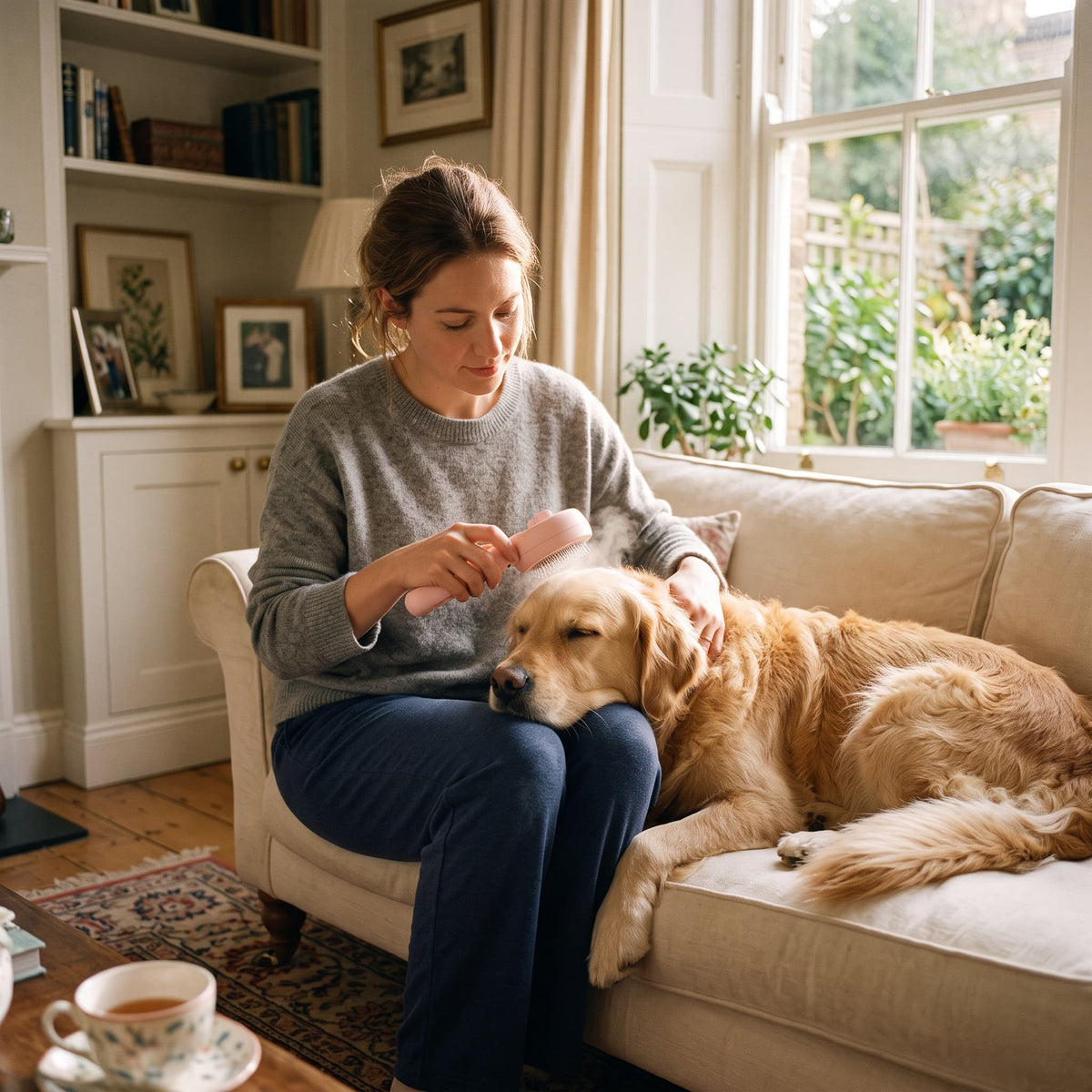
Regular grooming is one of the most important things you can do for your dog's health and wellbeing. 🐾
It's not just about keeping them looking their best — though that's a definite bonus. Regular grooming keeps the coat clean and healthy, reduces shedding, prevents painful matting, allows you to spot any lumps, bumps or skin issues early, and strengthens the bond between you and your dog. It's also a lot more affordable than frequent trips to the groomer. 💛
The good news? You don't need to be a professional groomer to do a great job at home. With the right tools and a little know-how, home grooming is completely achievable for any dog owner — whatever breed you have.
Here's everything you need to know. 🐾
1. Start With the Right Tools
The single most important factor in successful home grooming is having the right tools for your dog's coat type. Using the wrong brush on the wrong coat can be ineffective at best and uncomfortable for your dog at worst.
Here's a quick guide to what you need:
Short coats (Labradors, Beagles, Boxers)
- A rubber grooming mitt or bristle brush for removing loose fur
- A deshedding tool during shedding season
Medium coats (Spaniels, Border Collies, Golden Retrievers)
- A slicker brush for daily detangling
- A deshedding brush for loose undercoat
- A wide tooth comb for finishing
Long coats (Shih Tzus, Afghan Hounds, Yorkshire Terriers)
- A slicker brush for daily brushing
- A dematting comb for tackling knots
- A fine tooth comb for finishing
Double coats (German Shepherds, Huskies, Samoyeds)
- An undercoat rake for removing dead undercoat
- A deshedding brush — essential during moulting season
- A wide tooth comb
2-in-1 Pet Deshedding & Dematting Brush 👈
Our 2-in-1 deshedding and dematting brush covers most coat types beautifully — with a deshedding blade on one side and your choice of fine tooth or wide comb on the other. Available in 4 size combinations to suit every breed from small cats and dogs right up to large breeds with thick coats. One tool that does it all. 🐾
Easy Clean Pet Grooming Brush 👈
For everyday brushing, our easy clean grooming brush is a game changer — simply swipe the button to retract the blades and push all the collected fur to the surface for easy removal. No more picking fur out of bristles by hand. Available in pink, yellow and mint green. 🐾✨
3-in-1 Electric Steam Spray Pet Grooming Brush 👈
For a truly professional finish at home, our electric steam spray grooming brush brushes, moisturises and self cleans all in one. The fine anti-static steam mist reduces static and flyaway hair while the skin-friendly massage bristles make grooming a genuinely enjoyable experience for your dog. Available in white, mint green and blush pink. 💛
2. Brush Before You Bathe
Always brush your dog thoroughly before bathing — never after. Brushing a wet coat can tighten knots and cause matting, making them much harder to remove. A thorough pre-bath brush removes loose fur, debris and any tangles before water ever touches the coat.
Tips for brushing:
- Brush in the direction of hair growth
- Work in sections — start at the head and work toward the tail
- Be extra gentle around the ears, armpits and groin where matting is most common
- Use short, gentle strokes rather than long sweeping motions
- Reward your dog with treats and praise throughout — make it a positive experience
3. Bathing Your Dog at Home
Most dogs need a bath every 4-6 weeks — though this varies depending on coat type, activity level and how much time they spend outdoors. Over-bathing can strip the coat of its natural oils, so resist the temptation to bathe too frequently.
What you need:
- A dog specific shampoo — never use human shampoo
- Warm water — not hot
- A non-slip mat for the bath or shower
- Plenty of towels
- A handheld shower head if possible
Step by step:
- Brush thoroughly before bathing
- Wet the coat completely with warm water — make sure you reach down to the skin
- Apply shampoo and work into a lather — avoid the eyes and ears
- Rinse thoroughly — leftover shampoo can cause skin irritation
- Towel dry and then allow to air dry or use a pet-safe dryer on a low setting
- Brush again once fully dry
4. Trimming and Tidying
For dogs who need regular trimming — particularly around the paws, ears and face — a good quality pet hair trimmer makes a huge difference to the finish you can achieve at home.
Pet Paw & Fur Trimmer 👈
Our pet hair trimmer is quiet, gentle and easy to use and has a built-in LED light — perfect for tidying up around the paws, face and ears between professional grooms. Available in 4 gorgeous colours including mint green, pastel yellow, lilac purple and blush pink. 🐾✨
Tips for trimming at home:
- Only attempt trimming once your dog is calm and comfortable
- Use scissors with rounded tips for safety around the face
- Trim the fur between the paw pads regularly — this prevents mud and debris getting trapped
- Never attempt to cut too close to the skin — leave this to a professional groomer
- If your dog is anxious about clippers, introduce them slowly over several sessions before attempting any trimming
5. Ear Cleaning
Ear cleaning is an often overlooked part of the home grooming routine — but it's particularly important for breeds with floppy ears like Spaniels and Basset Hounds, where airflow is limited and moisture can build up.
What to look for:
- Dark discharge or wax buildup
- Redness or swelling inside the ear
- Your dog scratching at their ears or shaking their head frequently
- An unpleasant smell
How to clean:
- Use a vet-approved ear cleaning solution
- Apply a few drops to the ear canal and gently massage the base of the ear
- Allow your dog to shake their head — this loosens debris
- Gently wipe the visible part of the ear with a cotton wool ball
- Never insert anything into the ear canal
If you notice any of the warning signs above, speak to your vet before attempting to clean the ears at home.
6. Nail Trimming
Nail trimming is the part of grooming that most owners dread — but overgrown nails can cause real discomfort and even affect your dog's posture and gait over time.
2-in-1 Professional Dog Nail Clippers and Grinder 👈
If you want to take your home nail care to the next level, our 2-in-1 nail clippers and grinder is the tool to have. Sharp stainless steel blades provide clean, precise cuts — reducing the risk of splitting or cracking — while the built-in grinder lets you smooth and shape the nail afterwards for a professional finish. The quiet low-noise grinder minimises stress for anxious dogs, the ergonomic non-slip handle gives you full control, and the built-in safety guard prevents over-trimming so you can work with confidence even if you're new to nail care at home. Everything you need for safe, stress-free nail trimming in one tool. 🐾✂️
How often: Most dogs need their nails trimmed every 3-4 weeks. You'll know they need doing when you can hear them clicking on hard floors.
Tips for nail trimming:
- Use sharp, dog-specific nail clippers — blunt clippers crush rather than cut
- Trim a little at a time to avoid cutting the quick — the blood vessel inside the nail
- If your dog has dark nails where the quick isn't visible, trim very small amounts at a time
- Have styptic powder on hand in case you accidentally cut the quick
- If your dog is very resistant, ask your vet or groomer to demonstrate the technique first
7. Dental Care
Dental hygiene is one of the most neglected areas of dog care — but gum disease affects the majority of dogs over three years old and can have serious knock-on effects for their overall health.
At home dental care:
- Brush your dog's teeth several times a week using a dog-specific toothbrush and toothpaste — never use human toothpaste
- Introduce tooth brushing slowly and with lots of positive reinforcement
- Dental chews and toys can help reduce plaque between brushing sessions
- Have your vet check your dog's teeth at their annual check up
8. Make Grooming a Positive Experience
The single most important factor in successful home grooming — beyond any tool or technique — is how your dog feels about the process. A dog who associates grooming with positive experiences will be calm, cooperative and easy to work with. A dog who finds it stressful will make every session a battle.
Tips for positive grooming:
- Start grooming from puppyhood if possible — the earlier you start, the easier it becomes
- Keep sessions short to begin with and build up gradually
- Use high value treats throughout — make grooming a rewarding experience
- Never restrain your dog harshly — if they're very resistant, stop and try again later
- End every session on a positive note — a treat, a play session or lots of praise
Your Home Grooming Toolkit Checklist
✅ The right brush for your dog's coat type
✅ A deshedding and dematting tool
✅ A pet hair trimmer for tidying between grooms
✅ Dog specific shampoo and conditioner
✅ Nail clippers and styptic powder
✅ Ear cleaning solution and cotton wool
✅ Dog specific toothbrush and toothpaste
✅ Plenty of treats for positive reinforcement
Final Thoughts
Grooming your dog at home is one of the most rewarding things you can do as a dog owner — it saves money, keeps your dog healthy and comfortable, and creates a bond that goes far beyond the grooming session itself. 🐾💛
With the right tools, a little patience and a lot of treats — you've got this. 💛
Loved this guide? Share it with a fellow dog owner who needs it! 🐾
Ready to build your home grooming kit? Browse our full grooming range at Urban Pet Shop 👈
Shop now at urbanpetshop 👈
🚚 Free UK shipping on all orders over £24.99
🍂 Autumn Sale — up to 35% off, automatically applied at checkout, no code needed!

Leave a comment
All comments are moderated before being published.
This site is protected by hCaptcha and the hCaptcha Privacy Policy and Terms of Service apply.